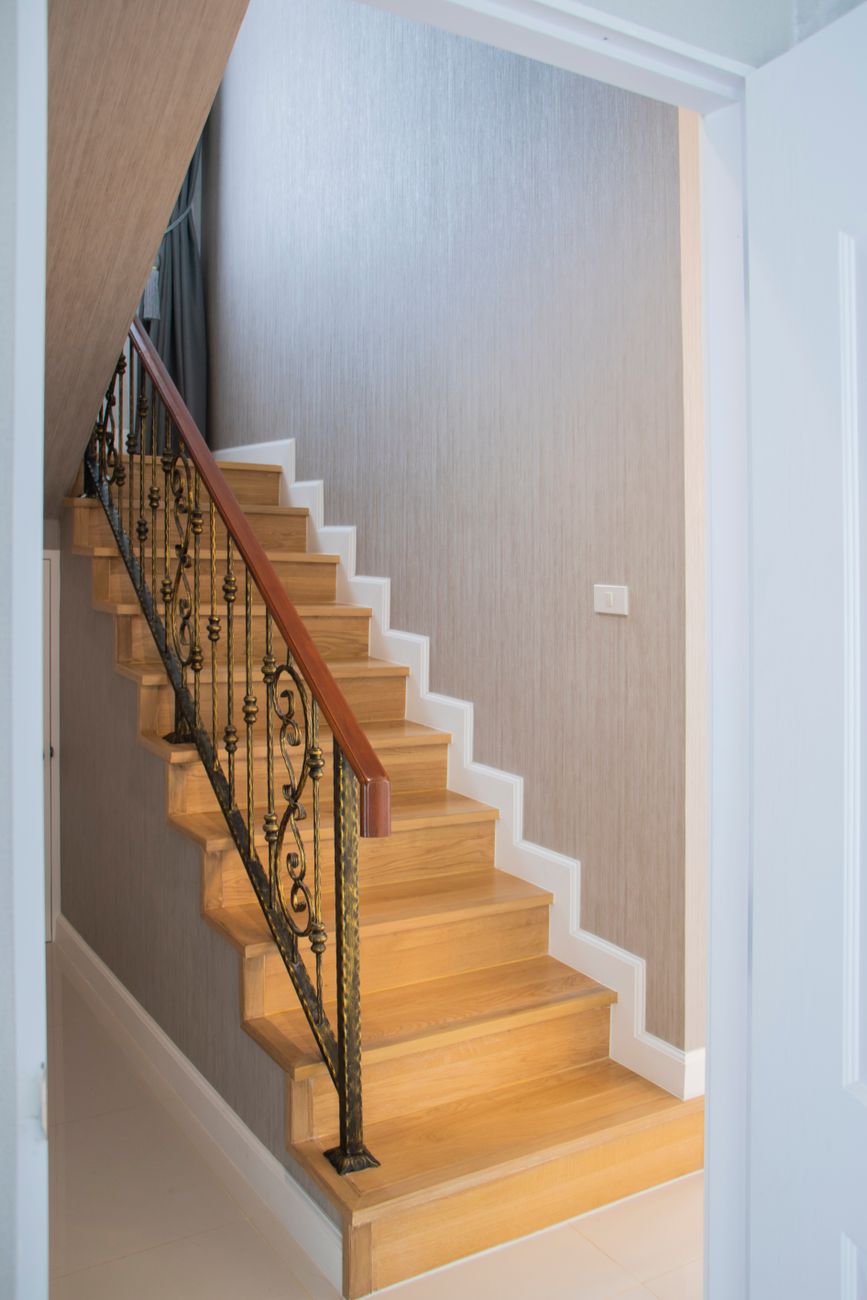
Broken staircase handrails are one of the most overlooked safety hazards in UK rental properties. Yet they can lead to serious injuries, potential legal liability, and costly medical bills that no tenant should have to bear alone.
If your staircase handrail is loose, cracked, missing, or unstable, your landlord has clear legal obligations to fix it. Understanding these obligations can protect both your safety and your budget.
This deep-dive guide explores the five key UK tenant safety rights relating to broken staircase handrails, the legislation that backs them up, and the practical steps you can take to get repairs done quickly and properly.
Your Rights Under the Landlord and Tenant Act 1985
The cornerstone of repair rights for UK tenants is Section 11 of the Landlord and Tenant Act 1985. This legislation places a clear legal duty on landlords to keep the structure and exterior of the dwelling in repair.
Staircase handrails are classified as part of the structure of a property. This means the responsibility for maintaining them lies firmly with your landlord, not you.
This obligation applies to all assured shorthold tenancies and most periodic tenancies across England and Wales. It covers not just staircases inside your home, but also communal staircases in blocks of flats.
Crucially, Section 11 rights cannot be contracted out of. Even if your tenancy agreement includes a clause stating that you are responsible for handrail repairs, that clause is almost certainly unenforceable.
Always check your tenancy agreement for any clauses that attempt to shift repair responsibilities onto you. Under Section 11, such clauses relating to structural elements like handrails are legally void.
Section 11 also covers the landlord’s duty to keep installations for the supply of water, gas, electricity, sanitation, and space and water heating in working order. While handrails are structural, they sit alongside these essential safety features in terms of landlord accountability.
If your landlord fails to act, you may have grounds to take legal action through the county court for both repairs and compensation. We will explore this further below.
The Homes (Fitness for Human Habitation) Act 2018
The Homes (Fitness for Human Habitation) Act 2018 strengthened tenant rights significantly. It requires landlords to ensure their properties are fit for habitation at the start and throughout a tenancy.
This Act uses the Housing Health and Safety Rating System (HHSRS) to assess hazards. Falls associated with stairs, ladders, and thresholds are explicitly listed as a Category 1 hazard under this system.
A broken or missing handrail can absolutely constitute a hazard under HHSRS, particularly if you have children, elderly tenants, or anyone with mobility issues in the household.
If a hazard is identified as Category 1, the local authority is legally required to take enforcement action against your landlord. This could include serving an improvement notice or even a prohibition order.
Under the 2018 Act, tenants can take their landlord directly to court without needing to involve the local authority first. This is a powerful right that many tenants are simply unaware of.
What Makes a Handrail Hazardous?
Not every minor cosmetic issue with a handrail constitutes a legal hazard. However, the following issues would likely be taken seriously under HHSRS:
- A handrail that is completely missing from a flight of stairs
- A handrail that is loose, wobbly, or detaching from the wall
- A handrail that has sharp edges, splinters, or broken components
- A handrail that is too short to cover the full flight of stairs
- A handrail positioned at an incorrect height that makes it difficult to grip safely
For more on safety hazards your landlord must address, read our guide on six hidden health and safety hazards UK landlords must fix.
Building Regulations Compliance for Handrails
Handrails in UK properties must comply with Approved Document K of the Building Regulations. These set out specific requirements for the design and installation of staircases and handrails.
Under Approved Document K, stairs must have a handrail on at least one side if they are less than one metre wide. If the stairs are wider than one metre, handrails are required on both sides.
The handrail must be positioned between 900mm and 1000mm above the pitch line of the stairs. It must be easily gripped and firmly fixed to the structure.
If your landlord has carried out any work on the staircase or the property and the new handrail does not meet these regulations, they are in breach of building safety standards.
If you suspect your handrail does not meet Building Regulations standards, take photographs with a tape measure visible in the shot. This evidence can be very persuasive when raising the issue formally with your landlord.
For properties built before current regulations were in place, landlords still have a duty to ensure the handrail provides adequate safety. The age of the property does not excuse substandard safety provisions where they create a fall risk.
Buildings Regulations non-compliance can also be relevant if your landlord ever tries to use a Section 21 eviction notice, as there are seven technical errors that invalidate a UK Section 21 eviction notice, including failures to comply with certain safety regulations.
Your Right to Compensation for Injury and Inconvenience
If a broken handrail has caused you injury, distress, or inconvenience, you may be entitled to claim compensation from your landlord. This right comes from both common law principles of negligence and statutory protections under the Landlord and Tenant Act 1985.
Compensation for Personal Injury
If you or a member of your household has fallen and been injured because of a broken or missing handrail, you may have a personal injury claim against your landlord.
To succeed, you would need to demonstrate that the landlord knew, or should reasonably have known, about the hazard and failed to take action within a reasonable time frame.
Compensation for personal injury can cover medical costs, pain and suffering, loss of earnings, and any other financial losses you have incurred as a direct result of the injury.
Compensation for Inconvenience and Distress
Even without a physical injury, you may be able to claim general damages for the inconvenience and distress caused by living with a known, unaddressed hazard.
Courts have awarded compensation in cases where tenants reported disrepair repeatedly and landlords failed to act within a reasonable period. The amount depends on the severity and duration of the issue.
Keep a detailed written log of every communication with your landlord about the broken handrail, including dates, methods of contact, and their responses. Photograph the damage regularly, especially the date on your phone. If you suffer any injury, see a GP immediately and ensure it is recorded in your medical notes.
Communal Staircases and Freeholder Responsibilities
If you live in a block of flats, communal staircases present a different but equally important set of rights. The handrails in these areas are also the landlord’s or freeholder’s responsibility.
Under the Defective Premises Act 1972, landlords owe a duty of care to all tenants and their visitors in respect of the common parts of a building. This includes communal hallways, staircases, and their handrails.
If you have been injured on a communal staircase due to a broken handrail, the landlord or managing agent can be held liable. This applies even if the handrail was damaged by a third party, such as another resident.
For tenants in Houses in Multiple Occupation (HMOs), the rules are even more stringent. HMO landlords face additional licensing requirements and safety inspections, and broken communal handrails are a common enforcement issue. To learn more, see our guide on five legal rights available to UK tenants in unlicensed HMOs.
Reporting Communal Handrail Issues
When reporting a communal handrail issue, direct your complaint to the landlord, managing agent, or freeholder rather than another tenant. Communal area repairs are always the landlord’s responsibility and cannot be passed on to individual tenants unless your tenancy agreement specifically includes service charges for maintenance.
If you are unsure about what costs you can legitimately be charged for, our article on how to budget for UK service charges as a tenant provides a helpful breakdown.
Practical Steps to Enforce Your Handrail Repair Rights
Knowing your rights is only the first step. Taking practical, well-documented action is what gets results. Here is a clear escalation path to follow.
Step 1: Report the Issue in Writing
Email your landlord or letting agent immediately. Clearly describe the problem with the handrail, explain the safety risk, and request urgent repairs. Ask for a written response with a timeline.
Step 2: Keep a Paper Trail
Save all correspondence. Take dated photographs and videos showing the damage. If the handrail wobbles, record a short video demonstrating the instability.
Step 3: Involve Your Local Authority
If your landlord does not respond within 14 days, contact your local council’s environmental health department. They can carry out an HHSRS inspection and, if they identify a Category 1 hazard, compel your landlord to make repairs.
Step 4: Consider Legal Action
If the council route does not resolve the issue, you can take your landlord to the county court under Section 11 of the Landlord and Tenant Act 1985 or under the Homes (Fitness for Human Habitation) Act 2018. The court can order repairs and award compensation.
For free, impartial advice on this process, you can always contact Citizens Advice or visit GOV.UK for official guidance on landlord and tenant disputes.
To help you stay organised and keep track of issues across your rental property, PadAudit can help you document and manage repair requests so that nothing falls through the cracks.
Never withhold rent to force your landlord to carry out repairs. This is a common misconception and can actually lead to eviction proceedings against you. Always use the legal routes outlined above instead.
Special Considerations for Vulnerable Tenants
The law recognises that certain tenants are at greater risk from hazards like broken handrails. If you are elderly, have a disability, or live with young children, your landlord’s duty of care is heightened.
Under the Equality Act 2010, landlords must make reasonable adjustments for disabled tenants. If a broken handrail makes your stairs unsafe due to a mobility impairment, your landlord must act quickly to restore it.
Similarly, local authorities give higher priority to hazard repairs in households with children under five or elderly occupants. Mentioning this when you report the issue can help accelerate the response.
Summary of Your Five Key Rights
To bring everything together, here are the five fundamental tenant safety rights you have when dealing with a broken staircase handrail:
- The right to repairs under Section 11 of the Landlord and Tenant Act 1985, obliging your landlord to maintain structural elements including handrails.
- The right to a safe, fit home under the Homes (Fitness for Human Habitation) Act 2018, allowing you to take your landlord to court if the handrail creates a hazard.
- The right to Building Regulations compliance ensuring that any new or repaired handrail meets approved safety standards for height, grip, and fixing.
- The right to compensation if you have suffered injury, inconvenience, or distress due to your landlord’s failure to act on reported disrepair.
- The right to safety in communal areas under the Defective Premises Act 1972, requiring landlords to maintain handrails in shared staircases and common parts.
Each of these rights is backed by enforceable legislation. You do not need to accept delays, excuses, or unsafe living conditions. Take action, document everything, and know that the law is on your side.
Frequently Asked Questions
Can my landlord charge me for fixing a broken handrail?
No. Under Section 11 of the Landlord and Tenant Act 1985, the cost of repairing structural elements such as handrails falls entirely to the landlord. You should not be charged through service charges or any other mechanism, unless you personally caused deliberate damage beyond reasonable wear and tear.
How long should a landlord take to fix a broken handrail?
There is no fixed legal timeframe, but the repair must be carried out within a “reasonable time.” For a broken handrail, which represents a fall risk, most legal experts would consider one to two weeks to be reasonable. If the stairs are completely without any handrail, the timeframe should be shorter due to the immediate safety risk.
What if I fall and injure myself before the handrail is fixed?
You may have a claim for personal injury compensation if you can prove the landlord was aware of the hazard and failed to act within a reasonable time. It is essential that you have reported the issue in writing with evidence, and that you seek medical attention promptly so your injuries are documented in your GP records.
Leave a Reply